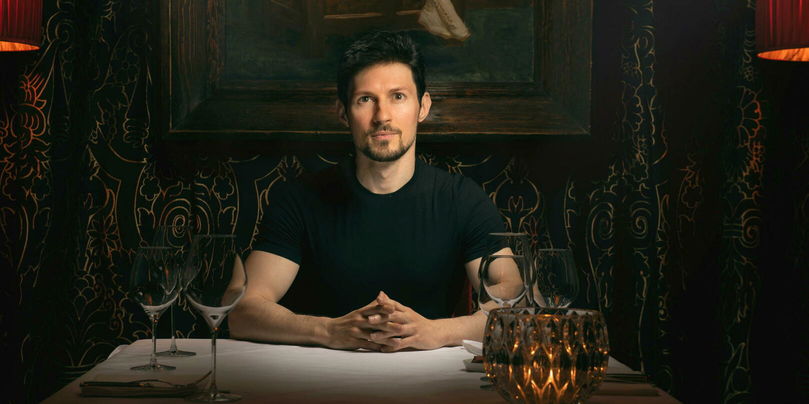
Durov stands, with will in hand,
Defying states that speech demand.
While Paris fumes and Macron texts,
Telegram’s free—control’s perplexed.
Pavel Durov, the embattled founder of Telegram, has drafted a will to protect his platform’s commitment to free speech and privacy, citing threats from “powerful governments” angered by his defense of digital liberty. In a June 15, 2025, interview with Le Point, Durov revealed that his children—six conceived naturally and others via anonymous sperm donation—won’t inherit his wealth for 30 years, ensuring they live ordinary lives free from financial dependence. His bold statements underscore a lifelong fight against censorship, making him a lightning rod for authoritarian regimes and a hero for libertarians.
Durov’s Will: Telegram’s Future Secured
Durov’s will ensures Telegram’s independence by transferring ownership to a non-profit foundation if he dies, safeguarding its mission of privacy and free speech. Owning 100% of Telegram, he rejects external shareholders to avoid the loss of control he experienced with VKontakte, Russia’s equivalent of Facebook. This structure, he argues, is the only way to maintain Telegram’s autonomy against government pressure, as seen in his 2024 arrest in Paris for allegedly enabling criminal activity on the platform—a charge he dismissed as absurd.
Defying Censorship and State Pressure
Durov’s commitment to free speech has drawn ire from global powers. He criticized the EU’s Digital Services Act as a dangerous tool for censorship, warning it could backfire on its creators by targeting dissenters, including those who wrote it. He recounted how French President Emmanuel Macron once messaged him directly, even after Durov’s public comments on France’s election meddling, but Durov refused to engage. He also condemned the social media ban on Donald Trump as a “dangerous precedent,” arguing that silencing a U.S. president threatens everyone’s speech.
A Champion of Open Discourse
Durov expressed a desire to meet activists like Yulia Navalnaya at the Oslo Freedom Forum to learn how Telegram serves their causes, but French authorities barred his travel. While not endorsing Navalny’s views wholesale, Durov defended his right to speak freely, a principle he’s upheld for nearly two decades. He contrasted his stance with Mark Zuckerberg’s, accusing the Meta CEO of lacking core values and bending to political trends, unlike Telegram’s unwavering commitment to user privacy.
Libertarian Perspective: Freedom Over Control
From a libertarian viewpoint, Durov embodies the fight for individual liberty against statist overreach. His refusal to compromise Telegram’s encryption or share user data with governments aligns with the principle that individuals, not states, own their speech and privacy. His will, designed to keep Telegram independent, reflects a deep distrust of centralized power—a stance libertarians and conservatives applaud. Durov’s battle against censorship, from Paris to Brussels, is a clarion call to protect digital freedom before it’s eroded by authoritarian laws like the Digital Services Act.
A Global Threat to Free Speech
Durov’s struggles highlight a worldwide crackdown on independent platforms. His 2024 arrest, France’s push to regulate X, and the EU’s censorship laws form a pattern of governments targeting tech leaders who resist control. Durov’s transparency about his limited ties to Russia—visiting family in St. Petersburg until 2021 but not returning since—counters smears painting him as a Kremlin stooge. His defiance, even under legal duress, exposes the hypocrisy of governments claiming to champion democracy while muzzling dissent.
A Call to Rally for Digital Liberty
Durov’s will and his stand against censorship are a wake-up call for Americans. Telegram, like X, is a vital space for unfiltered discourse, especially for conservative and libertarian voices challenging establishment narratives. Users must support Durov’s fight by demanding platforms resist government pressure and advocating for laws that protect privacy and speech. The global assault on digital freedom, from Paris to Washington, threatens everyone. Durov’s resolve shows what’s at stake—now it’s up to us to defend the open internet.
Conclusion: Pavel Durov’s will is more than a personal document—it’s a manifesto for digital freedom. By shielding Telegram from government control and ensuring his children’s independence, he’s fighting for a world where speech and privacy triumph over censorship. His revelations to Le Point expose the lengths powerful states will go to silence dissent. Americans must back Durov, supporting platforms like Telegram that resist authoritarian overreach. The battle for a free internet is here, and Durov’s courage lights the way.
Read on LEPOINT