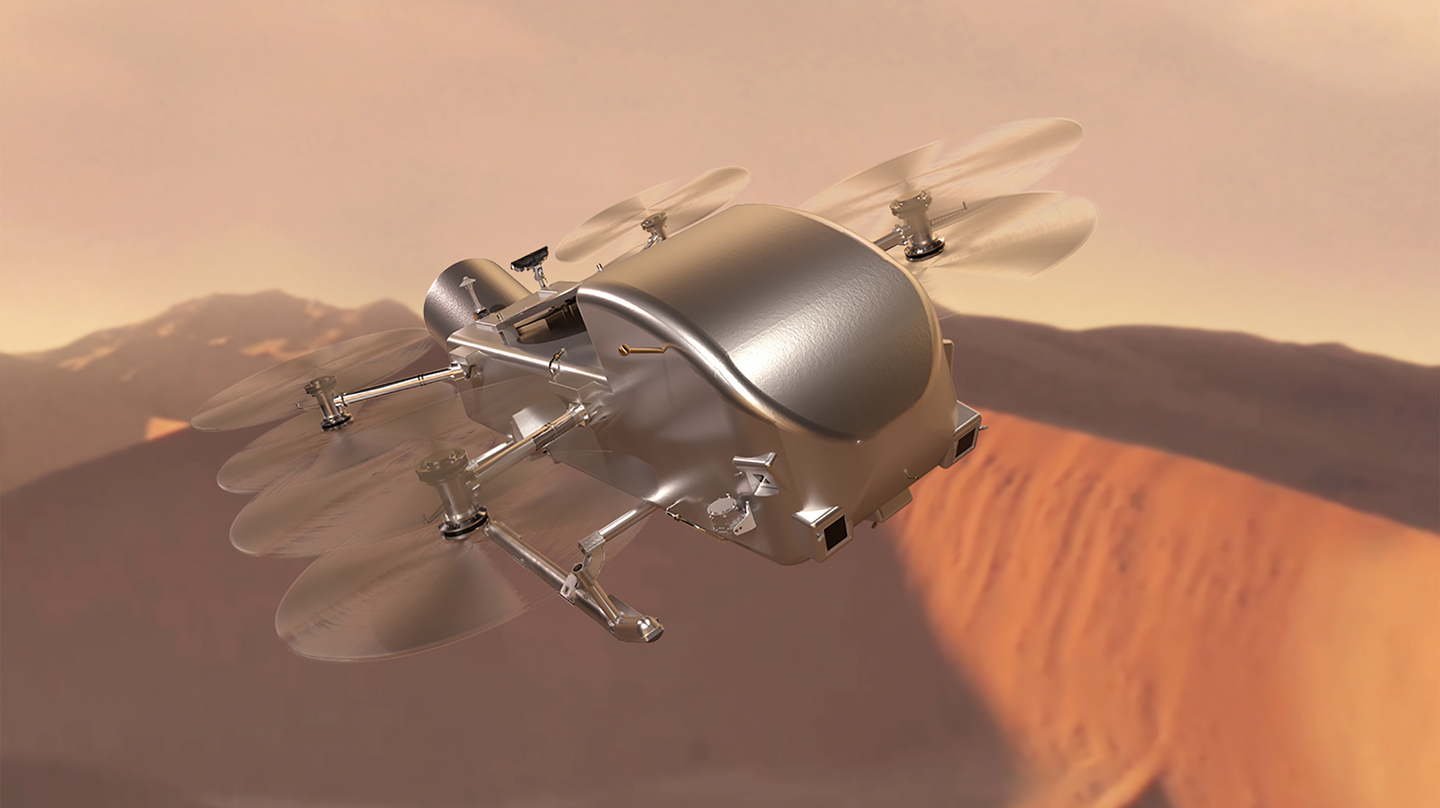
Dragonfly Mission Reaches Critical Milestone
NASA's ambitious Dragonfly mission, a nuclear-powered helicopter designed to explore Saturn's largest moon, Titan, has passed a significant checkpoint. This milestone confirms that the mission's design, fabrication, integration, and testing plans have been fully approved. With this achievement, the project can now shift focus to constructing the spacecraft itself, bringing us one step closer to an unprecedented exploration of Titan's alien landscape by 2028.
Why Titan Matters in Space Exploration
Titan, Saturn's largest moon, is a world of intrigue with its thick atmosphere and lakes of liquid methane. It offers a unique opportunity to study prebiotic chemistry and conditions that might resemble early Earth. Dragonfly, equipped with nuclear power to sustain long-term operations in Titan's harsh environment, will hop across the moon's surface, collecting data over a planned two-year mission. This endeavor showcases the power of human ingenuity and the drive to push boundaries through innovation and independent problem-solving.
Innovation Without Overreach
The success of Dragonfly's development highlights how focused teams, driven by a passion for discovery, can achieve extraordinary feats. Rather than relying on excessive oversight or centralized control, NASA's collaborative efforts with private partners and specialized engineers demonstrate the strength of decentralized expertise. This approach ensures efficiency and fosters creativity, allowing projects like Dragonfly to thrive on merit and shared goals.
What’s Next for Dragonfly?
With the design phase approved, the next steps involve building and rigorously testing the spacecraft to ensure it can withstand Titan's extreme conditions. The helicopter's nuclear power system, a cutting-edge solution for energy in deep space, will be a key focus. By 2028, Dragonfly is expected to launch, embarking on a journey to uncover Titan's mysteries. This mission not only advances our understanding of the solar system but also inspires a spirit of exploration and self-reliance in tackling the unknown.
A Vision for the Future
Dragonfly represents more than just a mission; it embodies the human desire to explore and understand our place in the cosmos. By prioritizing innovation and minimizing unnecessary barriers, such projects pave the way for future endeavors where individuals and teams can freely pursue groundbreaking ideas. As we look to 2028, Dragonfly stands as a testament to what can be achieved when vision and determination are unleashed in an environment that values open collaboration and market-driven solutions.
Read on SPACE