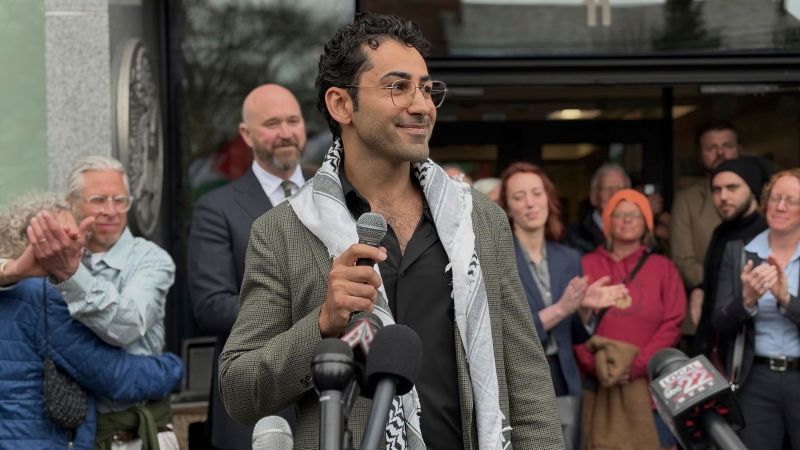
Unexpected Arrest at a Citizenship Interview
In a striking case that underscores the importance of individual rights, a Vermont judge on Wednesday ordered the release of Mohsen Mahdawi, a Palestinian man who was detained by immigration officials during an interview meant to finalize his U.S. citizenship. Mahdawi, who previously led protests against the war in Gaza while a student at Columbia University, found himself in custody in a situation that has sparked widespread concern over government overreach.
A Stand for Personal Freedom
This incident raises critical questions about the balance between state authority and personal autonomy. The arrest of an individual during a process as significant as a citizenship interview suggests an intrusion into the fundamental right to pursue a lawful life in the United States. Advocates for minimal government involvement argue that such actions can deter individuals from engaging in civic processes, fearing unexpected repercussions. Mahdawi’s release by the judge is seen as a victory for those who champion the idea that personal freedoms must be protected against arbitrary state actions.
Background of Activism and Arrest
Mahdawi’s history of activism, particularly his leadership in protests at Columbia University, appears to have drawn scrutiny from authorities. While exercising his right to free expression, he became a visible figure in advocating for Palestinian causes. His arrest during a routine citizenship interview has led many to question whether his past activism played a role in the decision to detain him, further fueling debates about the right to dissent without fear of retaliation.
Implications for Immigration and Free Expression
The case also highlights broader concerns about immigration policies and their impact on individual lives. Supporters of open and fair systems argue that the government should focus on facilitating lawful immigration rather than creating barriers or instilling fear. A system that respects personal initiative and free markets—where individuals can contribute to society without undue interference—benefits everyone. Mahdawi’s release sends a message that the judiciary can act as a check on excessive governmental power, ensuring that the pursuit of a new life in America remains accessible and just.
A Call for Transparency and Fairness
As this story unfolds, it serves as a reminder of the need for transparency in immigration processes. Many are calling for clearer guidelines to prevent similar incidents, ensuring that individuals are not penalized for their beliefs or past actions when seeking to build a future in the U.S. The judge’s decision to release Mahdawi is a step toward reinforcing trust in a system that values personal rights over unchecked authority.
This case is a powerful example of why safeguarding individual freedom remains essential in a society that thrives on diversity and open dialogue. It prompts reflection on how we can create a framework where government plays a supportive, rather than obstructive, role in people’s lives.
Read on CNN